African Americans in the United States
History
Slavery
The oppression of African Americans in the United States began, as it did globally, with slavery. Slaves were transported in inhumane conditions and then treated as property by wealthy, white landowners. They were not allowed to learn how to read or write. Many of them were separated from their families. Although not all slave owners treated their slaves especially harshly, they still regarded them as "less than," simply due to the color of their skin. These prejudices have remained in society until today, although in slightly less obvious forms.
Eventually, the Civil War was fought between the Northern and Southern states. The North won, and slavery was officially abolished. However, this did not even begin to end the problems that African Americans faced in American society.
Voting Rights
After the Civil War and the Reconstruction of America had ended, Southern states created laws to prevent African American citizens from voting. They imposed rules about passing literacy exams, property ownership, and poll taxes. These laws removed the means for specifically African Americans to be able to vote. When they attempted to vote anyway, they were physically threatened and/or harmed.
Voting rights were not granted to African Americans until the 1965 Voting Rights Act was signed into law.
(Source: https://www.loc.gov/collections/civil-rights-history-project/articles-and-essays/voting-rights/)
 |
| http://www.utica.edu/academic/ssm/history/vra/ |
"Separate but Equal"
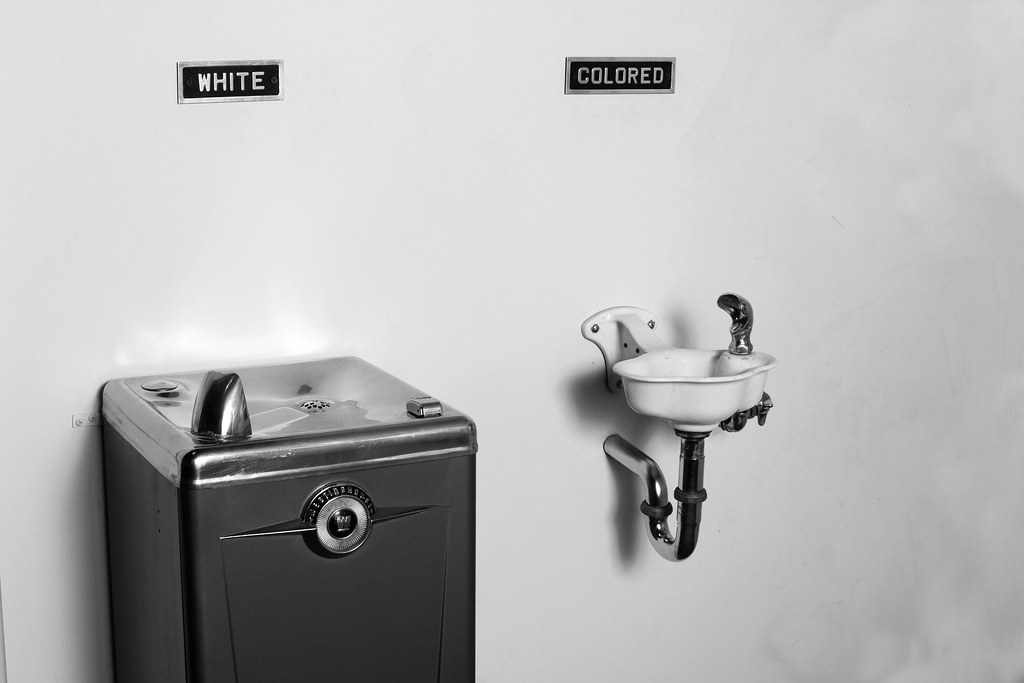
Oppression continued in the form of unjust laws stating that races - specifically, "White" and "Colored" could be treated as equals but given separate facilities and institutions. In reality, these facilities were anything but equal. White individuals were invariably given better supplies, facilities, and educations.
 |
| https://www.flickr.com/photos/ghholt/4362417954 |
Some famous events protesting this ideology included Rosa Parks refusing to give up her seat on a bus for a white person and the famous Brown v. Board of Education court case. In this case, the Supreme Court unanimously voted to outlaw segregation of schools. Schools were then required to be integrated, but this faced much opposition.
 |
| http://thegrio.com/2014/04/21/brown-v-board-of-education-60-years-later-are-us-schools-becoming-more-segregated-again/ |
Housing Discrimination and Education
If a person of color wishes to move into a predominantly white area, they often face discrimination. This has been a pattern throughout history. Concepts such as White Flights, when white people move away from an area where someone of color moves in contribute to the continued segregation of neighborhoods. However, many people of color face discrimination when applying for housing. Although the instance which the following man describes took place many years ago, the same discrimination happens today:
In cases where white people and people of color are segregated in housing, they are also segregated in schooling. Because the buses stopped transported students across neighborhoods, they now have to attend schools in their school zones, which for children of color are usually as separate and unequal as schools were historically. This sets the children up to be very disadvantaged for the rest of their lives, because they do not have the opportunities to gain the educations and encouragement they need to gain white cultural and social capital. Because of housing discrimination and segregation, we set them up for failure in the white culture of power.
(Source: http://thegrio.com/2014/04/21/brown-v-board-of-education-60-years-later-are-us-schools-becoming-more-segregated-again/)
Housing discrimination does not only affect the education which African American children receive. Many white people have distinct ideas about the areas in which they live. They are typically associated with gangs, drugs, and crime. However, since we forced them into these areas and situations with our discrimination against them throughout the entire history of the United States, I do not believe that we should blame them for their circumstances. Rather, we should be sympathetic and fight to avoid perpetuating the negative stereotypes and prejudices which circulate in the white communities. The fact that many African Americans live in different circumstances than the "middle-class ideal" does not mean that we should fear them or fight against integration of neighborhoods and schools.
Jazz Music
Jazz music was created based on African music traditions and singing styles. It began in New Orleans, in a town called Storyville. This area was a red-light district where many African Americans lived and worked. The center of jazz later moved around the United States, but it began in a segregated area where African Americans joined together to preserve their culture and create a new one.
(Source: https://www.scaruffi.com/history/jazz1.html)
Billie Holiday
Billie Holiday was an extremely famous singer of blues and jazz. While she made tremendous strides against racism, being the first black woman to record and tour with a white band, she also suffered from many racist acts against her. This presented itself in her music.
(Source: http://www.pbs.org/wnet/americanmasters/billie-holiday-about-the-singer/68/)
Many of us remember Billie Holiday and other musicians like her for their musical talents, but fail to remember the racist society which oppressed them and sometimes hated them. We cannot choose which parts of history to remember, and the history of jazz music is no different.
The Civil Rights Movement
No talk of African American history in the United States would be complete without the Civil Rights Movement. Led by Martin Luther King, Jr., this movement involved peaceful protest and march against the oppression felt by African Americans. Others, such as Malcolm X, advocated for more violent protests. However, the most successful and impactful response to oppression and injustice took place with Martin Luther King, Jr.'s marches, sit-ins, and speeches. The white population did not respond favorably. They used violence, police brutality, and threats against the protesters. However, their violence did not prevail - at least not overtly. The legacy of Martin Luther King, Jr. lives on today, with people of all races and ethnicities hailing him as a hero.
 |
| http://www.history.com/topics/black-history/martin-luther-king-jr/pictures/martin-luther-king-jr/martin-luther-king-during-the-march-on-washington |
Implications for Teaching
As I move forward in my education and become a teacher, knowing this background will help me immensely. Many people refer to the Civil Rights Movement as a thing of the past, assuming that we have moved past it and do not have a need for it. However, as long as there is discrimination and institutional racism refusing African American children their rights to flourish in their cultures and providing them with the tools to understand the culture of power, our job is not done. We need to advocated for integration of neighborhoods and schools. We need to get to know people who are different from us so we can challenge our own stereotypes and then encourage others to do the same. Because I have been born with privilege, I need to use that privilege to fight the oppression that exists in society today.

No comments:
Post a Comment